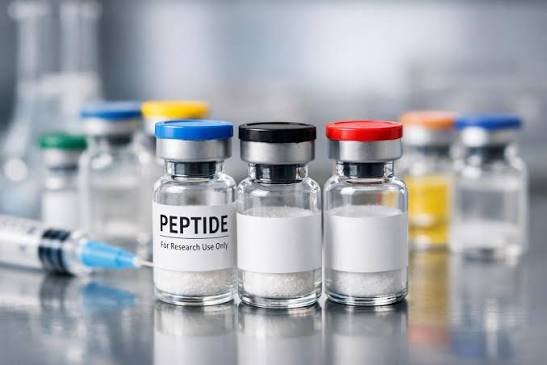
Peptide testing is an essential part of research peptide characterization. Producing a peptide with the correct sequence is only the beginning. Researchers also need appropriate analytical evidence to assess characteristics such as chromatographic purity, molecular mass, and identity.
For pharmaceutical companies, biotechnology organizations, academic laboratories, and contract research teams, analytical characterization can help determine whether a peptide meets the specification required for a particular research project.
This guide explains the role of peptide testing, HPLC, mass spectrometry, LC-MS, purity analysis, and analytical documentation when evaluating synthetic peptides.
Peptide Testing: Quick Answer
Peptide testing uses analytical techniques to evaluate characteristics of a synthetic peptide. Common approaches include HPLC for chromatographic purity and mass spectrometry for molecular-mass information and identity support.
Depending on the peptide and research objective, a testing package may include:
- HPLC analysis
- LC-MS or mass spectrometry
- Purity assessment
- Molecular-mass determination
- Batch documentation
- Certificate of analysis
- Additional analytical characterization where required
The appropriate testing strategy depends on the peptide sequence, modifications, intended application, purity specification, and research requirements.
Why Is Peptide Testing Important?
Synthetic peptide production can generate the desired peptide alongside related components.
Potential sources of variation can include:
- Incomplete coupling
- Deletion sequences
- Truncated peptides
- Side reactions
- Modification-related products
- Residual reagents
- Purification-related impurities
Analytical testing helps researchers understand the material they have received.
This is particularly important when a peptide is being used in experiments where reproducibility and material characterization matter.
A stated purity percentage without supporting analytical context may not provide enough information for a research team to evaluate a peptide properly.
What Does Peptide Purity Mean?
Peptide purity describes the proportion of the desired peptide relative to detectable components under a specified analytical method.
This distinction is important.
A reported purity value is meaningful only in the context of how it was measured.
Researchers should therefore ask:
- What analytical method was used?
- What does the reported percentage represent?
- Is the analysis batch-specific?
- Is supporting chromatographic data available?
- Has peptide identity also been evaluated?
Purity and identity are related but different analytical questions.
A peptide can show a strong chromatographic profile while still requiring additional analysis to support molecular identity.
HPLC Peptide Testing
High-performance liquid chromatography, or HPLC, is one of the most widely used techniques for peptide analysis.
The method separates components based on their interactions with the chromatographic system.
For peptide research, HPLC can be used to evaluate the chromatographic profile of a sample and estimate the relative abundance of the principal peptide peak and related components.
What Can HPLC Tell Researchers?
Depending on the method, HPLC can provide information about:
- Chromatographic purity
- Retention time
- Related components
- Sample profile
- Separation behavior
HPLC is therefore valuable for assessing the chemical profile of a peptide sample.
However, HPLC alone should not automatically be treated as complete proof of molecular identity.
That is one reason complementary analytical techniques can be useful.
LC-MS Peptide Analysis
LC-MS, or liquid chromatography-mass spectrometry, combines chromatographic separation with mass spectrometric detection.
The chromatography component can separate compounds, while the mass spectrometer provides molecular-mass information.
This combination can be particularly useful when researchers need both separation and mass-related information from the same analytical workflow.
For synthetic peptides, LC-MS can help support questions such as:
- Does the observed mass correspond to the expected peptide?
- Are additional detectable components present?
- Does the analytical profile support the expected material?
The exact interpretation depends on the peptide and analytical method.
Mass Spectrometry for Peptide Characterization
Mass spectrometry can provide molecular-mass information that helps support peptide identification.
When researchers know the expected molecular mass of a peptide, the observed analytical result can be compared with the expected value.
This is particularly useful for modified peptides because modifications can alter molecular mass.
For example, when a research team orders a labeled or chemically modified peptide, mass spectrometry can provide valuable evidence that the expected mass is present.
Peptide Identity vs Peptide Purity
These two terms should not be confused.
Purity asks how much of the detected material corresponds to the principal component under a particular analytical method.
Identity asks whether the material corresponds to the expected peptide.
A strong analytical program may therefore use complementary approaches.
For example:
HPLC → chromatographic purity
Mass spectrometry → molecular-mass information
Together, these techniques can provide a more informative characterization than either measurement alone.
What Is a Certificate of Analysis?
A Certificate of Analysis, or COA, is documentation associated with a particular material or batch.
For research peptides, a COA may report information such as:
- Product identification
- Batch number
- Purity
- Analytical method
- Molecular mass
- Testing date
- Storage information
- Other product-specific results
The exact format varies among suppliers.
Researchers should review the actual documentation rather than assuming that every peptide supplier uses identical testing standards.
What Should a Researcher Look for on a Peptide COA?
When reviewing a COA, consider whether it clearly identifies:
Product
The document should correspond to the peptide being evaluated.
Batch
Batch or lot identification can help establish traceability.
Purity
The reported purity should have an associated analytical method where applicable.
Identity
Molecular-mass or other identity-related information can provide useful confirmation.
Testing information
Researchers should be able to determine what was tested and, where relevant, when and how.
Storage information
Appropriate storage conditions can be important for maintaining material integrity after delivery.
Peptide Testing for Custom Synthesis
Analytical testing becomes particularly important for custom peptide synthesis.
A custom project may involve a sequence that does not exist as a standard catalog product.
Researchers therefore need confidence that the final material corresponds to the requested specification.
A typical custom project can involve:
Sequence → synthesis → cleavage → purification → analytical characterization → final material
The exact workflow varies according to the peptide.
SciLight Biotechnology provides custom peptide synthesis together with analytical services for research projects requiring peptide characterization. SciLight Biotechnology
Testing Modified Peptides
Modified peptides can require additional analytical consideration.
Examples of research modifications include:
- Fluorescent labels
- Biotin
- Terminal modifications
- Conjugates
- Cyclized structures
- Modified amino acids
- Other chemical modifications
A modification changes the expected characteristics of the peptide and can therefore affect analytical interpretation.
Researchers should provide the complete modification specification when requesting testing.
Peptide Purity and Research Application
The appropriate purity requirement depends on what the peptide will be used for.
A research team performing an exploratory experiment may have different requirements from a laboratory using a peptide as an analytical reference material.
Similarly, a pharmaceutical discovery program may establish its own internal specifications.
Therefore, there is no universal purity number that automatically makes a peptide appropriate for every research purpose.
The research specification should be established first.
Peptide Testing for Pharmaceutical Research
Pharmaceutical organizations often require greater documentation and traceability than casual research procurement.
Depending on the project stage, teams may evaluate:
- Identity
- Purity
- Molecular mass
- Batch consistency
- Analytical method
- Documentation
- Storage
- Material traceability
The exact quality requirements depend on the company’s internal procedures and the stage of development.
Early discovery research and regulated development should not automatically be treated as having identical analytical requirements.
Peptide Testing for Biotechnology Companies
Biotechnology companies may require analytical services during multiple stages of development.
Testing can support:
- Lead discovery
- Assay development
- Target validation
- Structure-activity studies
- Modified peptide evaluation
- Peptide libraries
- Research reproducibility
- Candidate characterization
A supplier capable of both synthesis and analytical characterization can simplify the workflow by reducing the need to coordinate multiple vendors.
How to Compare Peptide Testing Services
When comparing peptide testing or peptide analysis providers, ask:
| Evaluation Area | Question |
|---|---|
| HPLC | Is chromatographic purity evaluated? |
| Mass spectrometry | Is molecular mass assessed? |
| LC-MS | Is combined analysis available when appropriate? |
| COA | Is batch-specific documentation available? |
| Custom testing | Can the analysis be tailored to the project? |
| Modified peptides | Can modified sequences be analyzed? |
| Reporting | Are analytical results clearly documented? |
| Technical support | Can researchers discuss their requirements? |
This makes supplier comparison more objective.
Common Peptide Testing Mistakes
Relying only on a purity percentage
A number without analytical context tells researchers less than a documented analytical result.
Confusing purity with identity
Purity and molecular identity are separate analytical considerations.
Ignoring modifications
Modified peptides can have different expected molecular masses and analytical behavior.
Not specifying testing requirements
Testing expectations should be discussed before production when possible.
Assuming every peptide behaves the same
Sequence composition and molecular characteristics can affect synthesis, purification, and analysis.
What Analytical Testing Should I Request?
The appropriate testing depends on the project.
For many research peptides, HPLC and mass spectrometry can provide useful complementary information.
For more specialized projects, additional characterization may be appropriate.
When requesting a quotation, provide:
- Peptide sequence
- Quantity
- Desired purity
- Modifications
- Intended research application
- Required analytical methods
- Documentation requirements
This allows the supplier to determine an appropriate analytical package.
Peptide Testing and Quality Assurance
Analytical characterization is one component of a broader quality process.
Quality assurance can also involve:
- Defined specifications
- Production controls
- Material traceability
- Documentation
- Batch identification
- Storage requirements
- Analytical review
For professional research procurement, these elements work together.
A peptide should therefore be evaluated as a complete research material rather than judged solely by a product-page purity number.
Why Analytical Services Matter When Choosing a Supplier
A supplier’s analytical capabilities can be an important differentiator.
If the same organization can synthesize, purify, modify, and characterize a peptide, communication between production and analytical teams may be more straightforward.
This can be particularly useful for complex custom projects.
SciLight Biotechnology offers peptide synthesis and analytical research services intended to support pharmaceutical, biotechnology, and laboratory research requirements. SciLight Analytical Services
Frequently Asked Questions
What is peptide testing?
Peptide testing uses analytical methods to evaluate characteristics such as purity, molecular mass, and identity of a synthetic peptide.
What is HPLC used for in peptide analysis?
HPLC is commonly used to evaluate chromatographic purity and separate the target peptide from related components.
What is LC-MS used for?
LC-MS combines chromatographic separation with mass spectrometry and can provide useful information about a peptide’s chromatographic profile and molecular mass.
Is HPLC enough to confirm peptide identity?
HPLC primarily provides chromatographic information. Additional techniques, such as mass spectrometry, may provide complementary evidence supporting molecular identity.
What is a peptide COA?
A Certificate of Analysis is batch-related documentation that reports specified analytical or quality information for a material.
What affects peptide purity?
Purity can be influenced by synthesis efficiency, sequence complexity, side reactions, purification effectiveness, and other manufacturing factors.
Should modified peptides receive additional testing?
Potentially. Modifications can change the expected molecular mass and analytical characteristics, so the testing approach should account for the complete peptide specification.
How do I request peptide analytical testing?
Provide the peptide sequence, quantity, purity requirement, modifications, intended research application, and desired analytical methods. The testing provider can then evaluate the appropriate characterization package.
Request Peptide Analytical Services
Reliable peptide research depends on knowing what material is being used.
HPLC, mass spectrometry, LC-MS, and other analytical approaches can provide valuable information about peptide purity and identity when selected appropriately for the research objective.
For pharmaceutical companies, biotechnology organizations, and research laboratories, analytical characterization should be considered alongside synthesis, purification, documentation, and quality requirements.
SciLight Biotechnology provides peptide synthesis and analytical services for research organizations requiring project-specific peptide characterization.
Contact SciLight Biotechnology to discuss your peptide testing or analytical characterization requirements.